
Understanding Variations in Spatial Daylight Autonomy (sDA) Results
When running identical annual daylight simulations in LightStanza, you may occasionally observe variations in Spatial Daylight Autonomy (sDA) scores between runs—even on completely unchanged models.
Why sDA Results Vary Between Runs
- Stochastic Raytracing Engine: LightStanza uses an internal stochastic raytracing calculation engine where light rays follow probabilistic paths. Because individual ray trajectories differ slightly between simulation runs, measured lux levels experience natural, minor fluctuations.
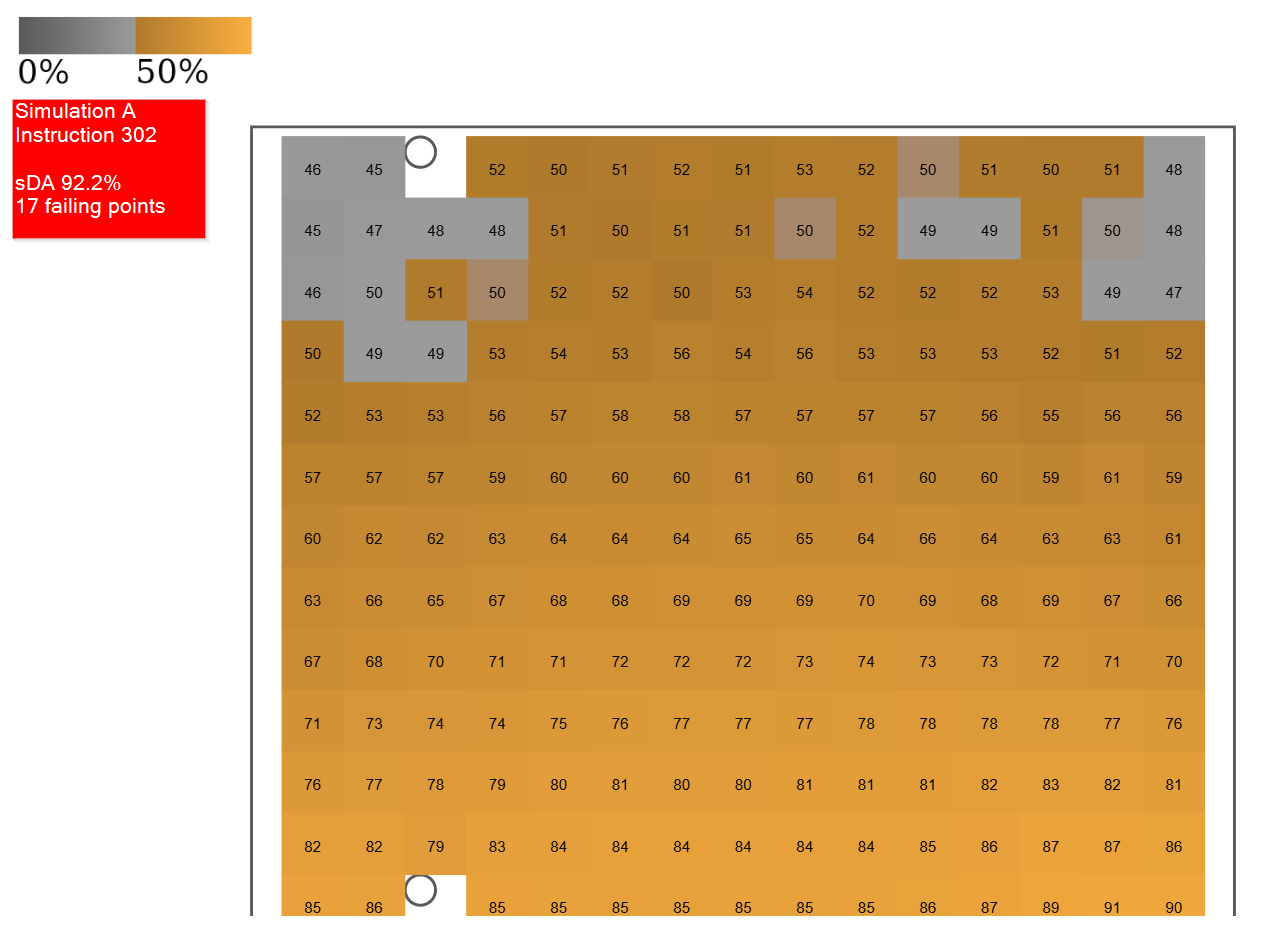
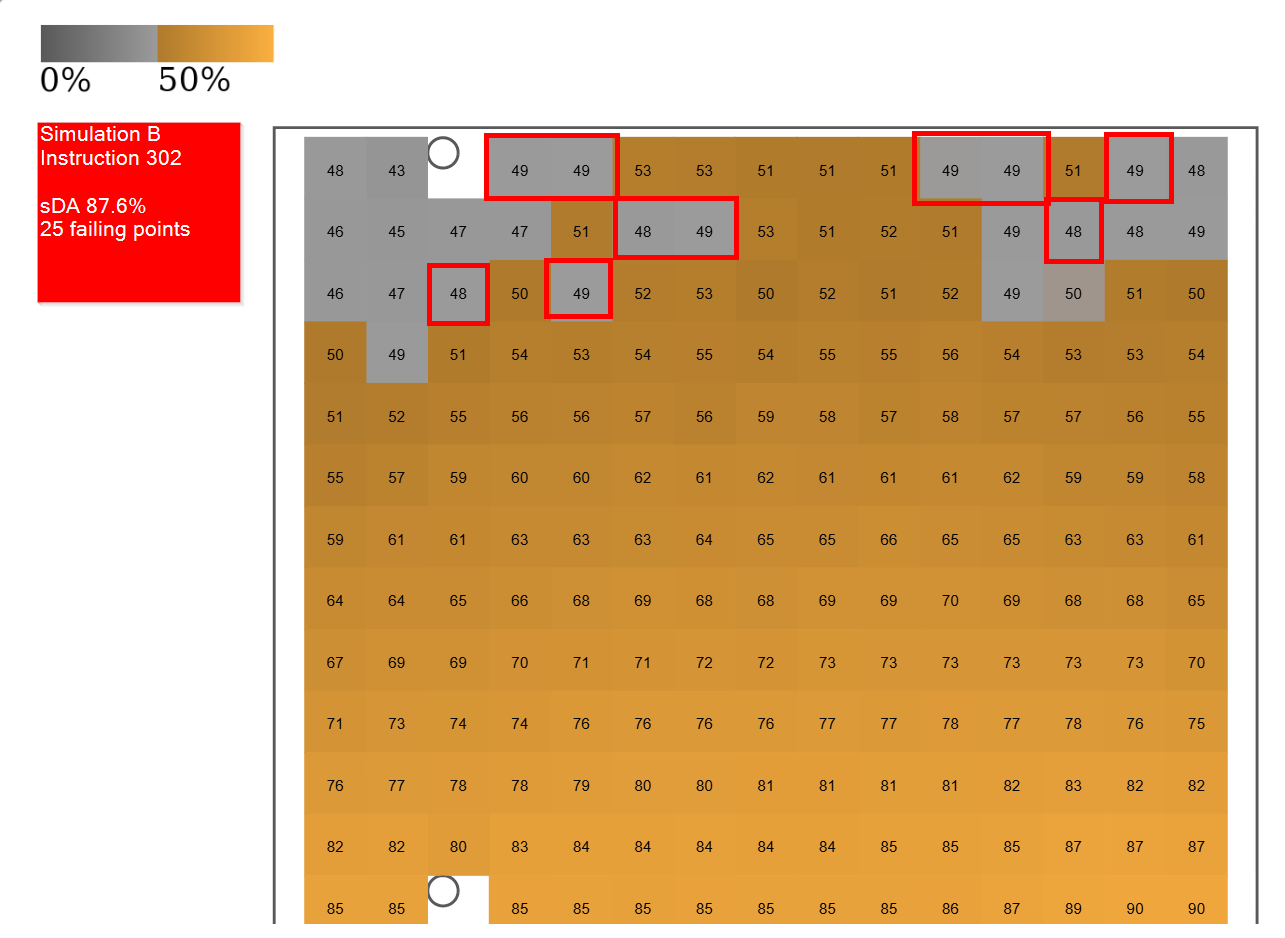
- Strict Metric Thresholds: sDA measures the percentage of area that receives at least 300 lux for at least 50% of occupied hours. Because sDA enforces a strict pass/fail cutoff at the 50% temporal mark, sensor points hovering right along the boundary line (such as 48% to 52%) can easily be nudged slightly above or below the threshold between runs.
-
Sensitivity in Small Point Grids: In smaller rooms or grids with fewer total points, a shift in just a few boundary points causes a noticeably larger localized percentage swing. For example, if a small room shifts from 17 failing points to 25 failing points due to minor raytracing differences, that specific space score can shift by over 4%, even while whole-building overall results remain virtually identical.
Recommended Practices for Improving Consistency
- Decrease Calculation Point Spacing: Setting a smaller grid spacing increases the total density of sampling points. A higher point resolution maps the spatial pass/fail boundary line far more smoothly and reduces the percentage impact that any single boundary point shift has on the room's total score. (Note: Always check whether your applicable building code or rating system mandates a specific grid spacing before making adjustments).
- Evaluate Spatial Daylight Saturation (sDS): Consider reporting Spatial Daylight Saturation (sDS) alongside or instead of sDA. Unlike sDA, sDS grants partial credit to sensor points falling short of the 50% temporal threshold. This structural design makes sDS less sensitive to raytracing variations right at the cutoff line.